
Last Updated on August 31, 2026 by Laura Coronel
Python is one of the most beginner-friendly programming languages, making it a great starting point for anyone who wants to understand how code works. Its clear, readable structure helps new learners focus on problem solving instead of memorizing complex rules. Whether you want to work with data, explore automation, or build simple tools, learning Python’s fundamentals is a practical and rewarding first step.
Many new learners begin by exploring online coding courses, because they offer a gentle introduction to Python concepts and help you practice through short, hands-on lessons. You do not need previous coding experience, just curiosity and a willingness to experiment.
Why learning Python basics matters
Understanding Python’s core building blocks gives you the foundation to explore more advanced concepts later. These basics are used in almost every Python project, whether you’re working with data, automation, or simple scripts. Once you understand how variables, loops, and functions work, you will be able to read code more confidently and build small programs on your own.
These early skills help you:
- understand how information moves through a program
- break tasks into smaller steps
- identify bugs more easily
- approach problems with a structured mindset
The best part is that Python encourages experimentation, it’s a language designed to help beginners learn by doing.
How Python works
Python is built around the idea of giving instructions in clear, readable steps. As you learn the basics, you begin understanding how programs flow and how small pieces of code work together to complete a task.
Here are the essential concepts that every beginner encounters:
Variables
Variables store information your program needs, such as numbers, words, or lists. You can think of them as labeled containers that hold your data. Learning how to create and update variables is one of the first steps toward writing useful programs.
Loops
Loops allow your program to repeat actions without writing the same line of code over and over. For example, you can loop through a list of items, repeat a calculation, or run a piece of code until a condition is met. Loops help you automate repetitive tasks and make your programs more efficient.
Functions
Functions are reusable blocks of code that perform specific tasks. They help you organize your work, avoid repeating code, and make your programs easier to read. As you learn Python, you’ll write your own functions and use built-in ones to solve problems more quickly.
These concepts build on each other. Once you understand them, you can begin combining them to create more meaningful programs.
Popular beginner paths for learning Python
There are several ways beginners explore Python, depending on their interests and goals.
Short, interactive lessons
Many learners start with guided practice sessions, where they write small pieces of code and immediately see the results. This helps build confidence and familiarity with Python’s syntax.
Hands-on projects
You might create simple calculators, small text-based games, or automation scripts. These projects reinforce the basics and show you how to apply them in real situations.
Data-focused learning
If you are curious about data analysis, you may explore topics like lists, dictionaries, basic statistics, and beginner-level data cleaning. Lessons in python courses can help you move from simple Python syntax into practical data skills.
Structured programs
If you want consistent direction and checkpoints, you can take a Python bootcamp online or follow a beginner-friendly curriculum that teaches concepts in a clear sequence. These structured paths can be helpful when you want consistent direction and checkpoints.
What beginners can expect to build
Even with just the basics, you can create useful and fun projects. These might include:
- a simple budgeting tool
- a text-based quiz
- a program that organizes files
- a basic password generator
- a script that analyzes small sets of data
Each project reinforces your understanding and helps you learn how Python works in real scenarios. As you keep practicing, your projects naturally become more advanced.
Helpful Treehouse resources
Treehouse offers several tools and learning paths that make it easier to understand Python’s fundamentals and build confidence as you go.
Library
The Library includes step-by-step Python programming resources, covering topics like variables, loops, data structures, and introductory scripts. You can learn at your own pace while practicing with short, interactive exercises.
Tracks
If you want to learn Python online in a set order, structured coding tracks guide you through beginner-friendly Python lessons, helping you understand how each concept builds on the last. Tracks remove the guesswork so you always know what to learn next.
Techdegree
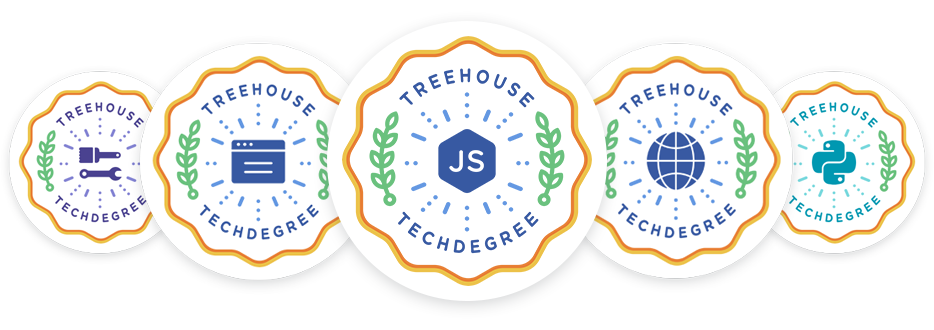
For learners who want deeper practice and real-world projects, the coding bootcamp and Python-focused Techdegree programs offer a more comprehensive experience. You build multiple projects, receive feedback, and follow a curriculum designed to help beginners progress with confidence.
These resources give you the flexibility to explore Python in the way that feels most natural for your learning style.
Tips for staying motivated as you learn
Python becomes easier with consistent practice. Here are a few reminders that help beginners stay encouraged:
- Practice in short, regular sessions instead of long marathons.
- Write code by hand or from memory to deepen your understanding.
- Break down problems into smaller steps before writing code.
- Celebrate each small project, they reflect real progress.
- Return to earlier lessons when concepts feel unclear.
You do not need to understand everything right away. Each small step helps you build confidence and momentum.
Start learning Python today
Learning Python begins with a few key concepts, and each step builds naturally into the next. If you are curious about coding, enjoy solving problems, or want to build simple tools, Python’s basics offer a meaningful and accessible place to start. With guided practice and supportive resources, you can begin creating real Python programs at your own pace.
Explore learning options and start when you are ready.
Learn. Build. Launch. Start coding today.
Join Treehouse